
The Talk
August 22, 2026
“I don’t ever want a child of mine to have the burden of caring for me.”
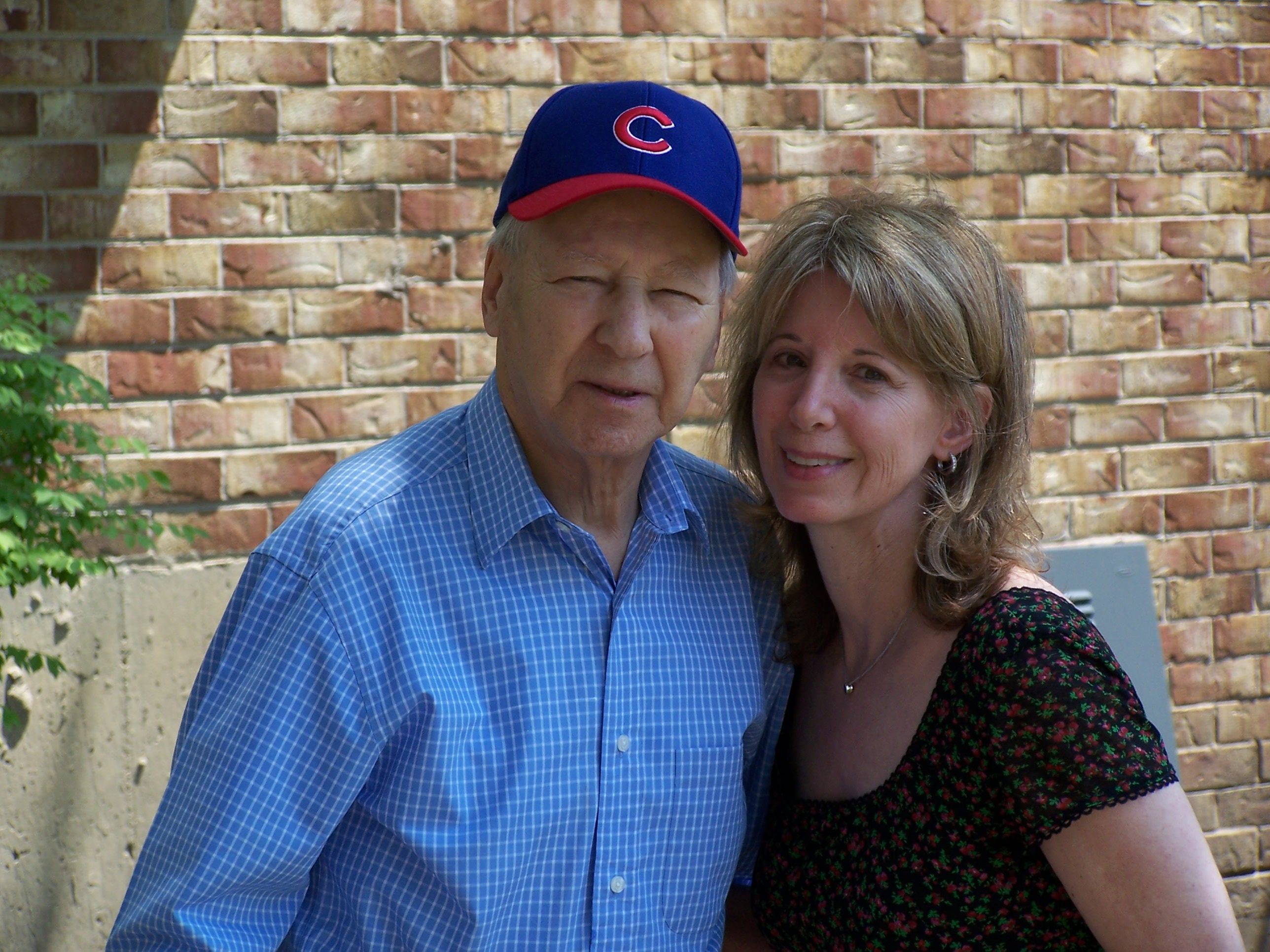
My father said those words when he was 75 years old. I had recently graduated from nursing school and was working at a level-one trauma hospital. Father was what you’d call a ‘young septuagenarian.’ I remember during one of his visits, he was sitting on the patio watching me play tennis with my husband when he grabbed a racquet, ran onto the court, and said, “Move over. I’ll be her partner for the next set.”
But it was the tone of his statement that took me by surprise. It sounded like an announcement—a declaration, a decree of exactly how he wanted his last few months, weeks, or years to play out. This was not unusual given his authoritarian personality. He was a practicing attorney and a lieutenant colonel in the Air Force. He was used to giving orders.
My response, “Dad, if you need care, I’m there for you.”
As a new nurse, I didn’t know much about caring for the elderly and how difficult that can be for a family and the patient. In the late 70s, there were no specific nursing courses to prepare students for eldercare – no special instructions or study guides, no role play, no textbook on caring for the aging family member.
I remember the few times my father was ill. He’d have on paisley pajamas and a plaid wool robe before crawling into bed and asking for a cup of hot tea with honey and lemon. Almost magically, an antique bronze bell would appear on his nightstand to summon my mother when he needed more hot water or an extra blanket. His cure for any cold or flu was simple—sweat it out. And, always within a few days, my father returned to his old self.
I didn’t think much about his wishes for a scenario that might or might not be needed and probably wouldn’t occur in the near future. His proclamation appeared to have been well thought out, yet there was an uncertainty that couldn’t be ignored––circumstances have a way of changing abruptly which makes planning for old age difficult and often a gamble. One’s future is subject to revisions at any time considering the ebb and flow of our lives and its fragility–we must be prepared for what might occur.
Because of the excellent state of my father’s health later in life, I didn’t dwell on his request, but instead ignored his statement by simply shrugging my shoulders. No rebuttal, no refusal, no real response.
I couldn’t bear to think about losing him.
This one-sided conversation took place thirty years ago, yet I recall his every word, including the serious look on his face when he told me; his black rimmed reading glasses intentionally pushed down to the middle of his nose so that he could peer over them, not through them. And the way his eyebrows ruffled with a slight flip on the ends, his hazel eyes looking straight into mine, his lips pursed.
What I didn’t understand was why he’d want a total stranger caring for him rather than his daughter. Perhaps he wanted to shield me from the emotional strain of being a nurse, caregiver, and daughter all rolled into one. Maybe he wanted to spare me the stress of traveling 1500 miles from my city to where he lived. He might have wanted to avoid the embarrassment of being dependent on me for changing his briefs, bathing, feeding, grooming, or dressing him. Father was always a proud man.
During the years that followed, Father brought up the subject of death several times in unique ways. He broached the topic when he talked about his money and how it would be distributed when he died. He also gave advice trying to prepare me for what he called a ‘huge inheritance.’ “You’re going to come into a large sum of money after I’m gone.” I’d cut him off and say, “You’re not going anywhere for a while.”
It bothered me to think about his death, my death, anyone’s death. It wasn’t a subject I wanted to dwell on. I believe now that these were conscious efforts by my father to draw me into a larger conversation about his inevitable demise and any last-minute details or concerns he might want to share with me.
I recall his stories about friends having to rely on their children or a spouse for care or how they themselves became fatigued, frail, and defeated. Perhaps he had to care for his parents, my grandparents, before they died. I never paid much attention to those things in my youth. He always told me, “The hardest part of getting old is watching your friends and loved ones pass away.”
As a young child, I used to fixate on death and the finality of life. I remember questioning my father and the look of disbelief and fear on his face when I brought up the topic of death. He’d say, “Don’t be thinking about death now. It’s not normal.”
Perhaps we should have begun the conversation then.
My last visit to see my father was on Labor Day weekend when he was ninety-eight. We had dinner at a nearby restaurant. I had to keep reminding him to eat. He whispered when he answered a question and had trouble finding the right words for his thoughts. His gait was weak and unsteady. I supported his thin body when he walked to the restroom. His breathing was shallow and slow. When I was about to go, he said, “Will I see you tomorrow?” I told him my plane leaves in the morning, but I’d be back. His grip around my arm tightened as we hugged. He asked if I could stay a few days longer. I said, “No.” It was as if he knew it would be the last time we were together.
Father died two months after that visit. He lived up to his earlier words—he never asked me to care for him. He hired a caregiver to assist during the final two weeks of his life. I would learn these facts after his death.
My last contact with him was an unanswered voicemail. I left three identical messages during those weeks asking him to please call. “Hi Dad, It’s your daughter. I love you.”
I don’t know what went on during my father’s last few days–whether his caregiver was male or female, if they were kind to him or what their responsibilities were, or even if they were qualified to care for him. I wished we had talked before he passed. I’m sure this is something many say after a loved one’s death. Why do we save so many thoughts for the end thinking there’s plenty of time for goodbyes?
As I approach seventy, I can’t help but think about my father and his unspoken concerns. But more importantly about why we failed in our efforts to share those ideas while he was alive and of clear mind and faculties. Perhaps he was worried about me and wanted reassurance that I’d be ok after he died. Maybe he was also afraid to die, like me.
Whenever I’ve breached the topic of dying with one of my children, their reaction is “Please Mom, stop. Why are you talking about this now? You know you’re going to live forever!” They’d cut me off before I’d finish my thoughts and find a way to change the topic. Sometimes they appear annoyed and call it a ‘guilt trip’ assuring me of its negative consequences.
I have an idea. Since I’ve only talked with them about death from a safe distance, never in person, I’ll make an attempt during a face-to-face visit, initiate the conversation in a quiet room, and bring up the topic in a softer more approachable way, “I’d like to read the playlist preferences for my funeral or “I’ve marked my belongings with your names on it.”
I’ll ask Alexa to play one of my deathbed requests, Bach’s Brandenburg Concertos. Then with my eyeglasses perched on the bridge of my nose. I’ll look into their eyes, without so much of a blink and initiate an open-ended discussion about death. I’ll start the conversation with . . .
“I don’t ever want a child of mine to have the burden of caring for me.”
Hello. My Name Is…
July 6, 2026
Lately I’ve found myself overcome with sadness for a slew of “never agains.” At odd moments the sensory snippets streak across my memory; the sweet cold damp of certain March days on the shores of Lake Michigan or bouncing up toward the sky performing backwards summersaults, or the shift of cooling sand under bare soles on a beach at twilight, postcoital smokes and pre-exam jitters. None of these will come again in any form but nostalgia.
In August of 2008, I attended my 60th birthday bash. This wasn’t the usual party celebrated with decorated cakes, colored candles, gifts, and a crowd of one’s dearest friends and family. This gathering included 150 men and women from my senior high school class who were on the cusp of turning sixty. Most of them were faces I hadn’t seen since I graduated, left home––not for college, but in search of communal love.
After high school, I tuned in, turned on, and dropped out while many of my friends went on to college, mapping out their lives with a degree of their choice. They surrounded themselves with the familiar: football games, living in dorms with friends, joining sororities, but always returning home whenever they had a break. And I became part of a wave of flower children––one of the many fatalistic seekers rejecting American obligations in favor of living for the “Now.”
Many of them stayed in touch with one another after college, moved back to their familiar hoods, and held tight to their high school memories. I preferred to move on and run from my traumatic past thinking it would never catch up to me.
*
Most of my apprehensions concerning whether I should attend this reunion were linked to my own insecurities and shame, which I didn’t understand at the time. It would be years before I’d come to the realization that I was jealous of many of their seemingly easy lives during and after high school, their perfect loving families, which turned out not to always be the case, and I could go on and on. Why were my high school days so difficult compared to how I conjured up the day to day lives of my fellow students?
It took a few weeks of indecision before I decided to be brave and attend the reunion. After all, high school also represented a time of yearning and waiting to wear lipstick, nylon stockings, a black dress, and a first cocktail––experiences that don’t always turn out the way one thinks they should.
The invite uncovered open wounds from my dysfunctional family, various teen clicks, the constant switching between hanging with the collegiates with their bleeding madras outfits, A-line or plaid skirts with giant safety pins, white shirts with gold circle pins (worn on the left if you were a virgin), penny loafers and white bobby socks rolled down to the ankle, or dressing like a greaser wearing tight straight skirts (no pins), dark nylons and black strappy low-heeled shoes. I loved the aggressive hair teasing and applying gobs of hairspray, shielding half your face to ensure stiff hair while riding in fast cars or motorcycles. I gravitated toward boys with slicked-back hair, tight white fitted tees, and black leather motorcycle jackets. And I hated the gossipers (even though I was one of them), and the usual backstabbing that high school girls inadvertently display.
But it wasn’t just the girls I feared, I was dodging the frightful memories from my childhood––the beatings, my rebellious self, being a runaway, and always feeling like an outsider. I took a different path after high school: protesting the Vietnam War, hitchhiking cross country, practicing free love, living with a Hollywood B actor, being raped by a cabbie, dropping acid and smoking marijuana––obtaining a degree in survival.

There was a certain inborn curiosity which finally persuaded me to attend. As a writer, I’ve never been able to avoid a good story and this promised to be one. I filled out the form, but hesitated before writing the check to attend, after all, $80.00 for a spaghetti dinner is a bit steep. Okay, there’s a DJ, soft drinks, and dessert, but who has time to eat with all the schmoozing going on? Yes, in that way, it’s just like high school.
Walking into the restaurant, at our favorite teenage hangout, (Old Orchard in Skokie, Illinois), was intimidating. Two balding older men and a woman dressed in black stood at the bar drinking out of martini glasses. I squinted as I tried to make out their names printed on their name tags (I didn’t have my glasses on for vanity reasons) and ended up asking them who they were. Both names drew a blank, so I walked down to the basement where the party was taking place.
A gal with black hair and blazing blue eyes approached me and said, “Hi Terry, how are you?” I must have looked confused as to who she was, (I still didn’t have my glasses on), so she said, “I’m Jill, your best friend since we were eight.” On closer examination, she looked familiar; she had a creamy complexion with thick dark hair styled appropriately around her face. I remembered how she’d cook us scrambled eggs most mornings before school. Yes, lots of cholesterol, but who knew then?
She looked the same once she identified herself. “How are you after all these years?” she asked. “I knew you were in Arizona, but I didn’t know how to get in touch with you. It’s been forty years since we’ve seen each other.”
A video flashed senior snapshots along with scenes from past football and basketball games. The DJ played our school song while a few pom-pom girls tried to remember their routines. There was the cute blond cheerleader who gained 80 pounds and drank one too many. And the shy boy who sat in front of me in homeroom now sat at my reunion table acting like a party animal, telling dirty jokes and snorting when he laughed.
The stuck-up girls were now “stuck-up older women” and many of the male hunks wore toupees and carried excess weight in their bellies. One man at my table looked my way and said, “I was on the football team and always had a crush on you.” I leaned over to read the name on his tag, but everything was a blur. “I’m Al Brownstein,” he said saving me the embarrassment of putting on my glasses.
“I don’t remember you. Why didn’t you just ask me out?” I said boldly.
A class photo was taken with the short folks in front. I stood in the back row next to Sheryl, who looked the same, except for a slight weight gain. Sheryl wore lots of makeup, then and now. She used to entertain us with a different hair color every month. Today it was blond, cut in a blunt style. Her big brown eyes were bulging with black mascara, like a cat’s whiskers, and her eyebrows penciled in a soft blond. I realized after a ten-minute conversation—she hadn’t changed at all.
Leaving aside any emotional component to the evening, it seemed exhausting, yet entertaining listening to the classmates who never left their high school days, the ones who knew everything about their fellow students’ progress throughout the years, including their failures, and humiliations. They quoted with authority the number of spouses, children, alcoholics, those who survived in business, and those who went belly up. They even had statistics on who died, when, and how. It was as if they were in constant contact with our entire class of more than four hundred students.
These are the ones who pounced on me for information: What have you been doing? Who did you marry? How many books have you published? Hindsight is easy, flawed, and pointless—far more important, what does it matter what books you should have written. What counts is what books do you want to write now.
The ones who needed to stay in the limelight had to be one of a crowd to exist––to live their lives. These are the ones who couldn’t sever ties with their past. Who knows, maybe they’re the lucky ones.
There’s something about watching fully grown adults regress to their teenage selves. Some characters backslide into old roles, others live out their revenge fantasy of letting peers envy their success, and there’s the select few who settle old scores.
During a high school reunion, we’re thrown into a room full of mirrors in which we are confronted by different visions of “self.” We see images of ourselves filtered through the lights and shadows cast by classmates’ memories. These multiple reflections afford people an occasion on which to reevaluate their own recollections and arrive at a new understanding of self.
I attended my reunion to see the goodness in people that we had every reason to suspect lacked any redeeming quality. Either they grew out of something or we did; but either way, coming face-to-face with it was deeply satisfying. That’s what reunions are about—that and a bit of voyeurism. Okay, a lot of voyeurism. Constructing a new narrative of one’s life and learning how the characters in the story end up.
If I had any personal regrets from attending my reunion, it was that I did not have enough time to engage with everyone and hear their story, but I realized that the passage of time proved to be a great equalizer amongst all of us.
July 21, 2026 at 12:00 pm
I never went to any of the reunions because of the reasons you expressed, Terry. The past is the past. Great story and learned more about you. Hugs, Joanne