| January 29, 2011My cleaning frenzy began with the hallway closet. I scooped up three of my husband’s winter jackets and placed them over my right arm along with a corduroy sports jacket and two pairs of worn sneakers. Grabbing the car keys, I unlocked the rear door and laid them neatly across the back seat alongside his black canvas briefcase with his initials M. S. R. embroidered in the lower right-hand corner.The next stop was my bedroom closet where I began a sweeping motion with my right hand from one hanger to the next as if I was in a department store shopping for the perfect outfit. I placed four tops, two sweaters, and four dresses across my left shoulder so that I could continue my madness. It was Saturday, my day off, but I still felt as if I had a timeline in which to complete this task. I’m clearing out reminders of my late husband.
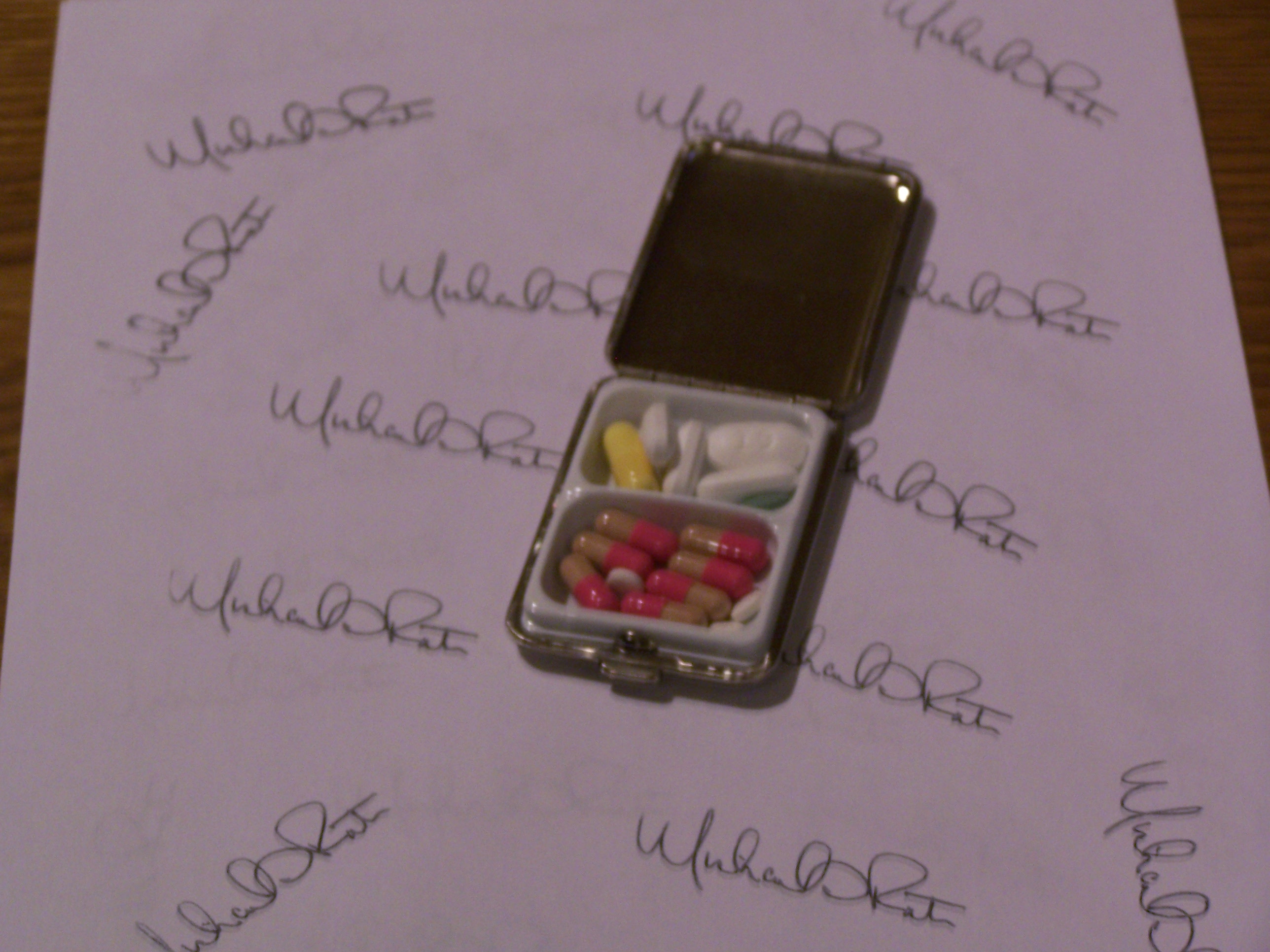
In a dresser drawer, I spot the silver pill box I bought for my husband five months before he died. By that time he was taking oxycotin and oxycodone, heavy narcotics, for long lasting and breakthrough relief from his severe bone pain. I watched his prescribed milligrams increase as his pain became intolerable. He often skipped a dose or waited too long before taking his breakthrough medication–all in an effort to think clearly for as long as possible. But mostly because he feared becoming a drug addict.
I rub my thumb and forefinger across the smooth layer of silver on the outside of the box as if I it was magical and had powers to bring about my husband’s resurrection—as if it could somehow bring him back to me. I felt a comforting connection between his fingertips and mine as I caress the lines on the maker’s mark. I open the box and find 12 pills neatly laid out in their individual grooves; the pink and brown color coordinated narcotics, along with the green Neurontin, ibuprofen, and two small diuretic tablets called Lasix for the swelling in his legs. None of these medicinal remedies saved his life. None of these pharmaceuticals did what we wanted them to do, what they proclaimed to do. They were just pills taken routinely to guard against pain, ingested like candy until the end of his illness when he could barely swallow anything without aspirating except soft foods and small sips of water. For some reason, his pillbox got left behind when I went on my initial rampage and disposed of all traces of his illness immediately after his death. All the liquids, pills, wraps, gauzes, tinctures, salves, patches, weekly pill organizers, and daily medicine logs—all the mixtures and concoctions. All the walkers, wheelchairs, shower seats, canes, and orthodics that were scattered throughout the house. As I closed the lid, I knew these drugs weren’t going anywhere. I knew they needed to stay in the little silver box—at least for now. By afternoon, I cleared out seven drawers of a large filing cabinet in our garage. I threw out thick folders stuffed full of old receipts clipped in thick rubber bands, information on previous house mortgages, tattered bank statements, and profit and loss disclosures from my husband’s past restaurants. I stood on a step-ladder tossing old menus laminated with his caricature on the cover, writing tablets which read “From the desk of Michael Ratner.” I imagined my late husband standing over me, pointing his index finger and shouting, “Stop. Don’t throw anything away.” That’s what he’d say if he was still alive. Just thinking about his reaction somehow lessened the drama and fortitude in which I went about my mission. I felt my body relax and for the first time that day I realized I was hungry and had missed breakfast. It was now 2:00 p.m. I broke my momentum for food. Memories are reminiscent of the past, reminders of what can never be again. But that wasn’t the reason I felt compelled to pitch the clothes that were constant reminders of the last few months, or the papers cluttering the steel drawers. It isn’t the reason I was driven to clear out the debris, the old manila folders that were packed tightly next to one another. No one saw the mess. No one complained about the piles of old papers, but still I was bound to complete my mission. It’s been two and a half months since my husband died. I wondered if my frantic actions were part of the grieving process, part of something a widow needs to go through during her first few months. It’s as if the act of investigating, sorting, discovering, along with the disposal of certain items might lead me to a sense of calmness and rationality. Just watching the bulging files, ancient trade publications, and ragged menus pilot themselves down to an opened trash bag on the cold cement floor unleashed a freedom I hadn’t felt for months. With a swift motion of my left hand, an old framed black and white photo of a covered wagon joined the pile. It was then I heard the shrill sound of shattered glass. I stepped down from the ladder to investigate the extent of damage. Tiny pieces of glass pierced through the sides of the bag and glistened from an afternoon sun. The cement floor I stood on seemed to shift beneath my feet. This might be a good time to cry, but I hold my tears in their path until my vision is completely obscured. I wait patiently, opening and closing my eyes in hopes that the fog will clear. I lift a bag with crackling glass on either side and place it in a red wagon. Walking out to the alley, I am careful not to tip the bag. With one arm I lift the lid of the trash can while my other arm thrusts the bag up above my shoulders and whips it into the opened trashcan. I listen to the sound of glass hitting the sides of the trash—-tiny fragile pieces breaking apart, never to be one again. |